My thoughts on the origins of Alignment, where it went wrong, and how I re-interpreted the thing for my own use... and hence, why I for one like Alignment for my RPGs.
Showing posts with label Gamesmaster Technique. Show all posts
Showing posts with label Gamesmaster Technique. Show all posts
Sunday, October 06, 2019


Sunday, September 29, 2019
My First Podcast - Thoughts On Murder Hobos
Ok, always one to jump on the bandwagon long after it has left the station, here we go with my very first Podcast! It's my first try, so it's definitely rough around the edges, but I'm excited to have gotten through the process of setting up shop and getting one out. It wasn't as hard as I expected! Ok. It runs about 14 minutes and it's no frills, no ads, and no pleas for support or anything ... I just jump in with two feet and talk off the top of my head. I hope it works, and provides some food for thought on a contentious subject in the world of RPGs.
Some thoughts on Murder Hobos, why it might happen, and what GMs might be able to do about it. Enjoy.
Some thoughts on Murder Hobos, why it might happen, and what GMs might be able to do about it. Enjoy.
Tuesday, April 30, 2019
Chaos and Horror in the World of Impius Malum

So, this week I want to make up for that bit of moroseness by discussing something much more fun! The Chaos and Horror of the World of Impius Malum. Of course I should probably preface this post with some sort of caveat about how this is Fantasy, and not a reflection at all of my views of reality in any way whatsoever, least my friends and neighbors begin to worry about about the state of my mind. But that should, naturally, go without saying, so I'll just breeze on down the road, and leave it at that.
Compared with the World of Death, the World of Impius Malum is sheer Wicked-Evil Joy. And horror. And perpetually entangling, agonizing, soul-shattering Chaos. But lots of fun... Depending, of course, on who you are. Unlike the World of Death where it makes absolutely no difference whatsoever at all, the World of Impius Malum as all about who you are.
If who you are happens to be Diabolically Evil, and you've gained status and power among the demons of the infernal World, why then you, too, can have lots of fun in the World of Impius Malum! Provided, of course, that your sanity lasts more than half a second, and you manage to maintain your (infinitely precarious) position of Power. And that you manage to avoid running into anyone who happens to be even the slightest bit more powerful than you. Which of course, isn't very likely at all... or even possible. Impius Malum just doesn't work that way, you see. Once there, it's almost a guarantee that while you can horrendously lord yourself over the Pathetic Miserables beneath your august and magnificent self, and as heinously as you can possibly imagine to the absolute nth degree, ... you will never be able to escape the same horrific fate from those monstrous devils above you. You'll see. It is the Wheel of Fortune Incarnate!
And of course, if you don't happen to be a Noteworthy Person of Power, and are merely one of the countless souls who dragged yourself through life as a poor miserable schlub, an ordinary human being who might be only modestly evil, or pretty damn evil, but not quite Exquisitely Horrendously Evil enough... well, then the World of Impius Malum really isn't ever so much fun for you at all. Such people are only the playthings of those wicked Powers that wildly dance, frolic, cavort, shrilly laughing, and gorging their bellies to bursting in riotous feasts, those who spend themselves indulging in every sensual pleasure imaginable... all while the Miserati loathsomely groan and suffer, endlessly humiliated, tricked, bedazzled, and terrified out of their wits Forever! Actually, for the vast majority of people, Impius Malum is a tremendous drag. A non-stop and wild-eyed game of deadly, horrifying, agonizing and humiliating tricks and traps, one after the other in a constant, incessant, ceaseless, and relentless progression. Every trick is unique, every trap shocking and disturbing, every combination mind-blistering in its terrifically ingenious terror! It's a World designed to entertain and delight those who are Truly Diabolically Evil via the mechanism of ceaseless torture and soul-searing terror. It is a Pandemonium of Evil Chaos. So fun! Well, compared with the World of Death, it definitely is. No seriously. Compared with that, it's a joy.
Welcome to the Wondrous World of Impius Malum!
 |
| The Wondrous World of Impius Malum |
The Bosch painting above gives a wonderful depiction of a tiny little itty bitty speck of a spot within the greater World of Impius Malum... which happens to be just like this across its entire infinite domain, though every inch of it is completely, mind-warpingly, unique. No two horrors are the same, and every single nightmare is tailored specifically to accentuate and focus the mind on the specific and peculiar sins, fears, foibles, and once-upon-a-time hopes and dreams of the damned souls who happen to wind up trapped there. It is an incredibly personal place! Very unlike the World of Death, it is. Indeed. Let's take a quick jaunt through the insanity, shall we?
Above you will find... a green suited monster with tree-twig hands fondling a despairing, yet beautiful naked blond women with some sort of black toad-like thing on her chest, reclining limply next to a grinning black mule. Above and behind her a Bird-headed man-thing wearing green jars on his feet and a large copper kettle on his head, sitting on a tall golden toilet while devouring a bird-and-fire farting Miserati whole, from the head down. Beneath this bizarre yet elegant and beautiful looking creature is a large blue bubble-droplet of toilet water into which a man is descending from the bum of the Bird-man, while another man, already trapped in the hideous droplet, is half immersed from the groin up and dangling over an open pit in the ground, into which a grey skinned nun is forcing one man to vomit brown turds while another person poops white blobs from the shadows. Meanwhile, the languishing woman is staring listlessly over at horn blowing, and rather adorable looking, sado-rabbit who happens to be carrying half a man upside-down on a pole-arm over his shoulder, while the woman next to him, another naked and beautiful blond, is furtively reaching for a weasel faced monster's sword with one hand while incongruously holding both a burning candle and a white vase in her other hand. By the contortions of her face you can see her mind has entirely snapped. Before her is a gambling table that has been overturned by a riot of hapless humans being violently mauled by a variety of animal and insect devils. AND SO ON! IT IS ENDLESS!
Such is the World of Impius Malus. A place of perpetual delights and terrors.
Fortunately for those Characters that dwell in the normal World of Elthos, the World of Impius Malum is very, very far away, and quite imaginary, like a dreadful bit of fairy tale designed to terrorize little children into behaving themselves when the adults aren't watching them. One quip about Impius Malum is enough to set most children of Elthos straight in an instant! In fact, actually, most Player Characters in Elthos really have no idea at all that there even is such a place as Impius Malum. Not the faintest idea. They never even heard of the place. This is because we usually breeze over their Character's childhood, and so I never go into what Elthosian Fairytales are like. Ha ha... they have no clue. Seriously. I have only once alluded to it in the 40+ years or so I've been playing the World of Elthos. Impius Malum a very far off land, indeed!
Which isn't to say that it isn't real. Oh it's definitely real alright. In fact, the Player Characters recently (well, not so recently anymore, but in the last major Elthos Campaign) brushed up against a distant reflection of Impius Malum when they came to the township of Whitewode. I describe that place in some detail (and very little of it, in fact!) in a previous post titled "The Overly Ambitious Campaign Design!", so I won't go into it again in this post. That one was long enough on that topic! But I will say that if you read that post, and get an inkling of the endless convolutions and intrigues among the Witches of Whitewode, you'll have some idea of what the World of Impius Malum is like. Now I should say that the Witches of Whitewode were absolute amateurs at the game of Impius Malum, though they believed with a dreadful certainty otherwise. Scarparelli, I'd like to mention, knew exactly what tremendous fools Sylvia, Jennifer, Johnathan, Muttmaw and the rest of their coven were, and he never let on for a single second, nor did his demonic minion Nicholas Blair. They strung the jolly bunch along for centuries before allowing them to haplessly fall into the Horrors of Doom that they had spent so long crafting for themselves. This is what the World of Impius Malum is like. Only, incredibly, far worse than that!
The World of Impius Malum is on the far side of the axis of Evil. Whereas Death is Lawful Evil, Impius Malum is Chaotic Evil. And as such they share that one trait in common ... they are really, seriously, Evil.
Who rules Impius Malum? Some say it's the Devil himself. But this is actually not correct. The Devil rules over Hell. And Impius Malum isn't actually Hell. It is its own place. So who? Some say it is The Elkron of War, Mars, or his Celestial Sire, Ares, the Lord of All Evil Chaos. And that would be correct. If you are aware of the Elthos Tarot Deck, then at this point you'd realize that Death is Ruled by Pluto, or his Celestial Sire, Scorpio. You can check that on the Elthos Tarot Deck Backface card here...

So the World of Death and the World of Impius Malum are the two extremes of Evil along the Metaphysical Axis of the Celestial Island Cosmological Map. If you want to find the World of Death, head East, and veer slightly South, and keep going. If you want to find the World of Impius Malum, head West, and veer slightly South, and keep going. You'll find them. They're there. Very, very far away ... but there.
Such is the backdrop of the World of Elthos.
Maybe at some point I'll chat a bit about other, lighter and happier realms of the Celestial Island. Perhaps.
To learn more about my Elthos Project, please visit my site at Elthos.com. And if you're feeling generous, please make a contribution. Thanks!
Sunday, February 04, 2018
My Take On Great RPG Design

My own World works on this principal as well. Sometimes my players are miffed by the fact that their missions are not as successful as they had wanted. But in most cases the reason for it is that they made poor choices, or had bad luck, and usually both. In other cases they work through the challenges and achieve their desired victory. But one thing I've noticed, the players who don't give up and say "that's not fair" are the ones who actually enjoy the game most.
https://elthos.com
Saturday, December 09, 2017
GM Technique - Tidbits on my Serendipity Style

...
This immediately brings to mind something I've been meaning to write a post about ... my Serendipity Style of GMing.
I rely very heavily on the notion that things will simply fit into place at the right time. That the Universe will provide answers to pending questions one way or another, and that I don't have to think too hard about my World's mysterious plot and backstory holes... they get filled in just-in-time by some sort of weird miraculous process. I could give a hundred examples. But I won't. In fact, that's probably all I actually want to say about it.
It's hard because you have to trust the Universe to answer things for you... which requires that you have a very alert mind which can take even tiny things that happen along the way and integrate them smoothly and fluidly into your World. I've had it happen so many times now, where something I see in the news or overhear in a restaurant, or catch a fleeting glimpse of while driving by ... triggers "The Answer" to yet another of my World's many mysteries ... I really can't count. But I can say that without each of those my World would be a disastrous loping beast threadbare and tattered as it careens into the abyss.
Fortunately for me and my players my trust in the Universe has proven wondrous with ever blossoming tidbits that have answered so many of the mysteries. So while I really can't recommend it as a style of GMing because it's far, far too risky ... I can also say that when it works it's truly a thing of beauty.
And no, I haven't the vaguest clue how to instruct anyone to use this technique. The only advice I can offer is ... relax, don't think too hard, and wait for the answers to appear.
Friday, May 27, 2016
Thoughts on Literary RPG Stories

However, despite the enthusiasm in some circles for Story Games, I will not be discussing those because my intention is to think about this in relation to my own game, which is Elthos RPG. My game is what people now'days would probably call a "retro-clone" of OD&D (I would be inclined to dispute this, however). The point is that I'm interested in using what might be called a Traditional RPG to produce Literary Stories.
First I should like to clarify what I mean by satisfying Literary Story. What I mean by this is that the resulting story has literary merit, follows in a general sense literary conventions such has having a story arc with a beginning, middle and end, shows a degree of character development, and by and large uncovers larger truths about life and the universe in which we live. In the end, when transcribed or told verbatim the story would entertain, and perhaps even enlighten the reader in some way.
When an author writes a story they have control over the Characters actions in the story in a way that the author of an RPG story does not. The Players control the various Characters in the RPG, and those Players typically will do unexpected things that the Gamemaster has not anticipated. This forces the game to adopt a strongly improvisational stance. When you add the fact of luck through dice rolling into the mix, it positively ensures that game per game, the Gamemaster has little or no control over the outcome of each episode. As a game this works perfectly. But as a story creation tool, well, like I said, the traditional RPG presents challenges. One never knows if the Player Characters will even live or die in any given game. And yet, the goal is to achieve a satisfying story that stands on its own merits and can be read from end to end and be enjoyed purely as a story in its own right.
Can RPG play result in such stories? I believe so. Does it require a special set of rules mechanics to do so by attempting to enforce "story"? I don't think so. What it requires is is a Gamemaster and Players who understand the nature of Story, and a willingness to achieve it through excellence of role play. That is all. Yet though this sounds simple enough, it is not easy. In the same way that Micheal Angelo was able to paint a masterpiece with relatively simple tools and following a standard formula of putting paint on a brush and applying it to a canvas, so too could true GameMasters (ie - Masters of the art) produce this kind of Story. The tools available are not nearly as important as the mind of the artist.
I have created over the years a number of examples of this kind of play and have published them on my blog. There are currently two primary examples, both based on the actual play of my test games between 2009 and 2014. You can read those stories via this page: http://elthosrpg.blogspot.com/p/elthos-rpg-play-tests.html.
I won't claim that they perfectly achieve the Ideal to which I aspire, but I believe they may suffice as examples of the direction I wish to go. Each entry is a Chapter that represents a single game session and they could be read in a ad hoc manner to get the idea, if you wish. However, the examples are rather long (totaling over 260,000 words for the 2011 - 2013 game) , and so I wouldn't expect to read them through in a single sitting.
What I would like to do now is discuss, and open a dialog about, the challenges involved with this objective.
One challenge is that of combining the chance involved in a dice game with the development of a coherent and satisfying plot line.
A related challenge is the 'Cat Herding' required to get Players to stay on Story Target. In other words many players have a tendency to completely forget their character's goals or interests as they encounter things in the world, and hence may wind up chasing after every detail presented by the GM. Learning as GM how to build a Campaign so that it leads to good story is one of the arts of the thing that is not easily explained, nor easily learned except by trial and error, and an excellent understanding and appreciation of what makes a good Story to begin with.
Another challenge is in the portrayal of a World that does not inhibit the game aspect, but at the same time effectively conveys the sense of the world, the scene and the characters involved.
I'm not going to try to tackle all of these challenges in this post, as it would turn out too long to read for many people. I'll just ruminate some, and leave it at that, and then continue posting on this topic with "- Part 1, 2, 3, etc" as new thoughts come to me.
So here I will talk a bit about the first challenge. That of Dice vs Story. It's probably the most commonly understood challenge, or at least the one I've seen most often discussed so far. It basically comes down to this: how can you create a coherent story when at any time the Heroes of the story can get themselves killed by an unlucky roll of the dice? Well, yes, this is a challenge indeed.
When reading a story it would be hard to swallow "And then Prince Valiant slipped while fighting the lone Goblin, and accidentally chopped off his own head" due to a Fumble roll that went horribly wrong. That is something that could happen in an RPG because we are dealing with the luck of the dice, and one never knows just how bad things will go when dice are involved.
So what's the answer to this? I can see a few possibilities. One, the Gamemaster might provide a buffer against such outcomes by including a "knock out" option for primary PCs. So instead of dying, they will knock themselves out. Yes, this is a mechanical modification, and a bit of a cheat in a way. But a modest one, and given it's utility for the purpose I wouldn't balk at including it as a house rule for my game.
 Another answer to this problem might be to ensure that in the event a major PC does happen to get killed, that in some way it turns out to be meaningful. This might be done by causing a kind of domino effect where in the end the fact that the hero perishes does something to the remainder of the story that causes lose ends to tie up a certain way, and thus still provides a satisfying story. In other words, you wouldn't say "And then Prince Valiant accidentally chopped his own head off. The end." You would instead finesse it. "And then Prince Valiant accidentally chopped his own head off... which resulted in Queen Illana marching with her army on Castle Frostguard in order to secure her sovereignty there, and this began the War of the Ladies and resulted in the Coronation of Prince Varin as King of Palamir." In other words, a Character death if handled with a bit of Story teller's magic can be the beginning of a new story, rather than The End.
Another similar way to handle it, at least for some kinds of Worlds, would be to not have it that Death is The End of the Character, but a significant event instead... as in one case in my world where a Character died and found themselves on the way to Hades, and had an adventure there (one that allegorically reflected what was going on in the campaign). He was subsequently rescued from Hades as a result of a Quest on the part of the other players. So Death of a Character from bad luck can and should be incorporated in a way that makes the bad luck something that blends in and works for the whole of the Story. Who knows? Perhaps the Character obtained some secret knowledge in Hades, or found a treasure there and was able to bring it back... thus turning bad luck into good luck ere the end.
Another way to handle this kind of thing would be for the GM to carefully ensure that no challenges are of sufficient difficulty to make it probable that the Player Characters will die. I'm not especially in favor of this approach because it runs counter some of my other goals as a GM, but for some it might suffice as a strategy. Simply lower the odds of a Bad Luck outcome.
Lastly, the Players themselves might try their best to play smarter, not harder. That means playing Characters intelligently enough to ensure that they don't get themselves into situations where their odds are poor, and endeavoring to maximize their chances of success. This, however, may also be a kind of cheat, as Players should be expected to Role Play, and it is quite possible that their Characters are actually not that smart. I have a Character in the Whitewode Campaign who is only of average intelligence, and he often makes plans that are poorly thought through. And that's fine, as the player is playing true to the Character. The results are often comical, in fact.
In any case, the issue of Dice vs. Story is one of those things that Literary RPG enthusiasts ruminate over, and there's quite a bit written about it out there if you poke around. The principal underlying the dilemma is that it seems difficult for one to play a game based on luck and still somehow derive an interesting and meaningful story out of it. I propose that it is certainly possible, and desirable. But it takes quite a bit of skill to pull it off, on the part of the GM and the Players alike. Yet, it is a worthwhile objective and I encourage people to try.
I'll be ruminating about this further on, most likely. But for now I wanted to jot down these thoughts. I hope you will forgive me for the rambling nature of this post.
Wednesday, May 11, 2016
Whitewode Township Tactical Map
Spoiler Alert! If you are one of my players you may want to avert your eyes from this post until the end of the Whitewode Campaign.

In addition to making Story / Plot Maps, I also, of course like to make Tactical Maps which in this case shows the layout of the North West corner of the town. To the upper right is the infamous Black Raven Inn, and on the upper left is the Church of Whitewode, Library, and School House, as well as Reverend Russel's Pastoral Residence outside of which you can see the Player Character Group has assembled.
RPGs do happen to be the most creative and fun hobby in the World. I think I could prove that in a court of law.
Here's an overhead view with the main locations investigated thus far labelled.

I would like to say that the RPG community has done a spectacular job creating gorgeous maps these past few years. Absolutely gorgeous. This is not one of those. This is instead a purely functional Tactical Map intended for use as the primary focal point for combat and movement of groups during the final phase of the Whitewode Campaign. It is even possible, frankly, that it may not be used very much at all, if it turns out the Party avoids the upcoming war with the Pechs and Gnolls, and slips away. That said, I am considering how to embellish it with a bit more artistic flair. I'm thinking of coloring in the rooves with tiles, and whatnot. Any suggestions would be happily considered. :)
Friday, April 29, 2016
Whitewode Campaign Story Map - Version 4
Below is the final version of the Whitewode Campaign Story Map. As I mentioned in my previous post this kind of map is used as a memory device to allow me to see the grand sweep of the Campaign at a glance. It shows major characters, related objects, moods, and key events occurring currently as relates to Whitewode.
Spoiler Alert! If you are one of my players you may want to avert your eyes from this post until the end of the Whitewode Campaign.
The map has not substantially changed from the earlier versions, which looked like this:
The first version is the simplest and contains the roughest overview, but would be sufficient to run the Campaign with. What it represents is a snapshot in time of who is who and where they are located, showing some additional elements such as mood and relationships.
The second version shows the same information, but with more detail. However in this case I left out the relative locations information as I ran out of room on the side of the paper where things would normally go. As you can see, it is an evolution of the first map and includes some additional detail, such as the key at the bottom which shows various objectives of specific characters or groups in the Campaign.
The third version is a combined and more complete combination of the first and second versions, which I posted in my previous blog post A Few Notes on Story Mapping which explains in more detail what is being shown. This version (3) certainly has enough detail to run with and includes everything I probably would need for the campaign. However, as I ruminated over version 3 I recalled additional elements that while not essential, might easily come into play soon. I also wished to clarify the environment such as the borders of Whitewode village, and give further hints as to the characters and include each of their most important aspects, which you can see in what was the blank space for notes earlier.
So here is version 4 which I am considering final for the purposes of tonight's game.
Note: if you want to see the enlarged view of the Story Map you can Right-click the image, and open in a new window. This will give you the jpg itself which most browsers will then allow you to zoom in on. Enjoy.
Also note that during the game this kind of Story Map is really only intended for my own use as Gamemaster, and contains information which the Players are currently unaware of. Of course all of this information is coded in a way that would make it difficult for the Players to interpret even if they saw the map, and they certainly would not understand the references in a way that would allow them to act on that information intelligently. So the map is not as much a giveaway as it may seem at first.
Lastly, I would like to point out that were I to write down all of the information in this image (which I have done elsewhere) then it would take up a great volume of pages, and not serve its intended purpose which is to give me a way to view all the important details of the Campaign at a glance. And that is the true beauty of the Story Map method.
Spoiler Alert! If you are one of my players you may want to avert your eyes from this post until the end of the Whitewode Campaign.
The map has not substantially changed from the earlier versions, which looked like this:
 |
| Version 1 |
The first version is the simplest and contains the roughest overview, but would be sufficient to run the Campaign with. What it represents is a snapshot in time of who is who and where they are located, showing some additional elements such as mood and relationships.
 |
| Version 2 |
 |
| Version 3 |
So here is version 4 which I am considering final for the purposes of tonight's game.
 |
| Version 4 - Final |
Note: if you want to see the enlarged view of the Story Map you can Right-click the image, and open in a new window. This will give you the jpg itself which most browsers will then allow you to zoom in on. Enjoy.
Also note that during the game this kind of Story Map is really only intended for my own use as Gamemaster, and contains information which the Players are currently unaware of. Of course all of this information is coded in a way that would make it difficult for the Players to interpret even if they saw the map, and they certainly would not understand the references in a way that would allow them to act on that information intelligently. So the map is not as much a giveaway as it may seem at first.
Lastly, I would like to point out that were I to write down all of the information in this image (which I have done elsewhere) then it would take up a great volume of pages, and not serve its intended purpose which is to give me a way to view all the important details of the Campaign at a glance. And that is the true beauty of the Story Map method.
Thursday, April 28, 2016
A Few Notes on Story Mapping
Sometimes Campaigns get complicated. There may be a lot of NPCs involved, or a lot of loose threads that have built up over time, or both, and you start losing track during the game of significant details that could make a difference. What I do to handle this situation is create what I call Story Maps. These are figurative in nature and are designed solely for the purpose of reminding me of all of the important places, people, things and events happening in a Campaign at a given time. This is also known as a Memory Map. It gives abbreviated information that allows me to see in one glance the entire sweeping panorama of the campaign. I find them quite useful.
Spoiler Alert! If you are one of my players you may want to avert your eyes from this map until the end of the Whitewode Campaign.
Here's an example:

Story / Memory Map... combination of story elements and relative locations. This version has all of the details I want to keep in mind for the game. The space on the bottom is for further notes as ideas should surface. The map is in pencil so I can amend it easily.
In this case what you see are circles with letters in them that represent characters. Some are inside larger circles which represent groups of characters who are aligned by purpose. There are some simplistic graphical representations of mood or events related to the characters, such as the storm cloud representing a conflict, or the wavy lines representing a type of attack that is ongoing in the area. In most cases the locations of the circles on the page reflect the relative physical locations of the characters on the scene, although not to scale. This is to remind me visually not only who is related to who, but where, physically, they are located in relation to each other. Note that sometimes this is not convenient to do, such as when a group is split up and parts are in one location while others are in another location. So flexibility here is really key. The idea of the memory map is that it need not be technically accurate - it only needs to serve as a reminder of what is going on. If it does this then it has done its job.
At the bottom of the page is a list of goals where I am showing characters and who or what they are striving for in a simple format: character X --> Thing or character Y. If there are multiple goals or a domino set of goals then it is X --> Y --> Z. If two characters are competing for the same goal then X --> Z <-- Y. etc. If characters are moving then it is represented with a dotted line and an arrow showing the direction.
All of which when combined helps me to visualize the entire scene with the main events, motivations and goals of the groups involved in the conflict.
There are no fixed rules for this, and no specific or unchanging nomenclature. The purpose of the Memory Map is to remind me, during the game, what the big picture is, and who is where in relation to the others, and what their goals are. This is not to be obscure, but because I find that each time I make a Memory Map the situation warrants a slightly different approach, depending on the complexity and details involved. The Whitewode campaign has gotten rather complex, and so this map helps me to keep all of the factions, the timing of actions, the motives of all characters and their relative locations in mind during the game. Least I, ahem, forget something important.
If you have any specific questions feel free to ask. :)
Wednesday, September 23, 2015
How I GM Elthos Social Encounters
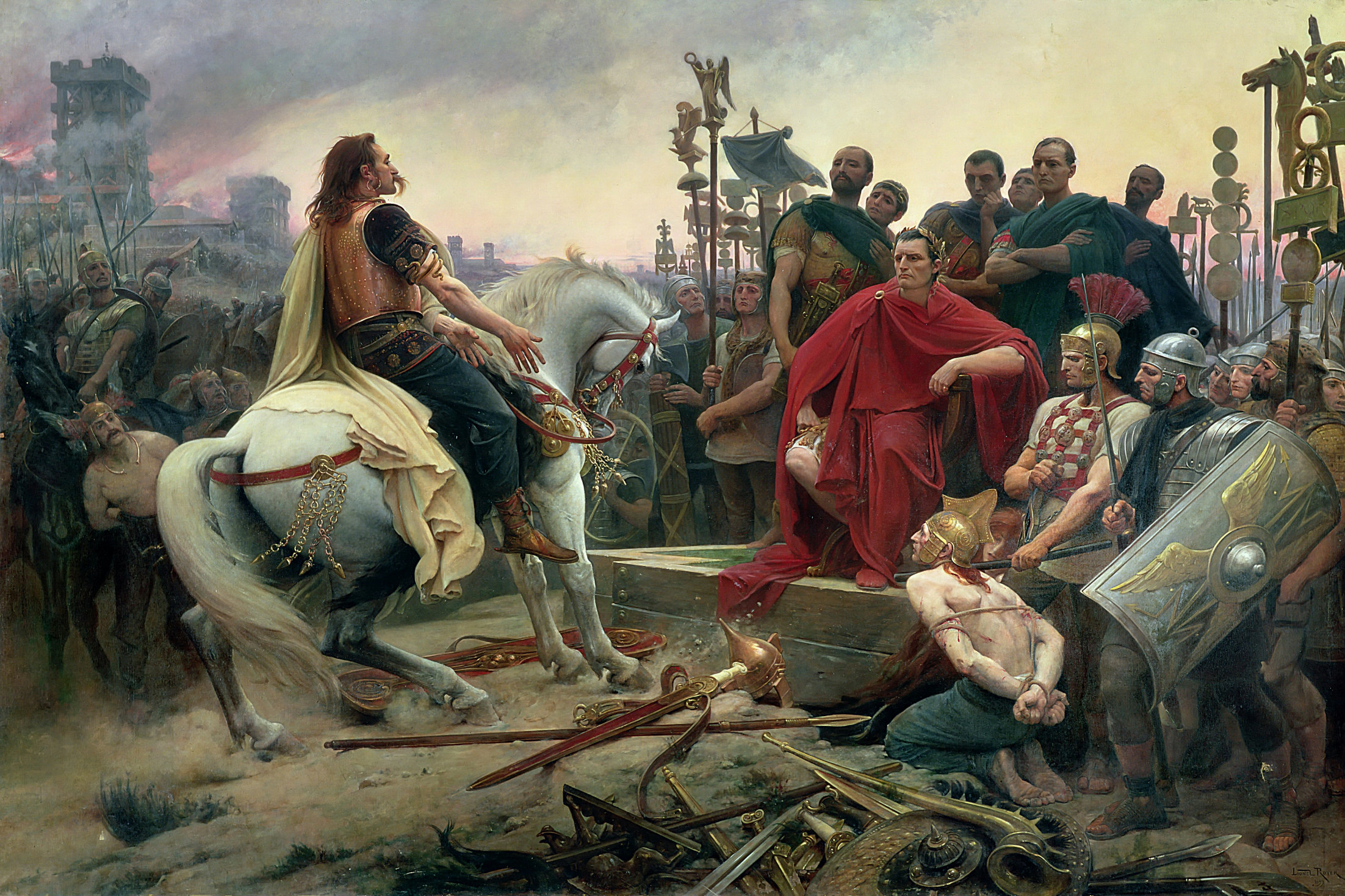
My strategy has always been to build encounters by determining who the main NPCs are, and what their personality and motives are. They are given a limited and finite amount of resources to work with and have personal objectives. It could be, for example, an NPC is Mutmaw, the Mayor of Hobbington whose objectives are to quell dissidents, enrich his friends and supporters, aggrandize himself to the Commons, and not step on the toes of those who are bigger than he is. His immediate objective is to find a husband for his big boned daughter Gurthtruda. He has a small number of personal henchmen who do dirty deeds, and he has a set of Officials under his command, including Drake Barnstormer the Captain of the Guard, Inspector Henderson the Detective (neither of whom are bad guys, actually), and so on. So, a typical adventure might include Barnstormer, and over the course of events may wind up drawing in the Mayor. That remains to be seen based on what the Player Characters do. I don't map out an exact path through any given adventure. I simply set up the motives and objectives and personalities of those involved and then as the Role Play unfolds it reveals the story.
When the Party gets to the point where they are not in combat and are simply in RP mode then everything is pretty much conversational. The Adventure is planned by defining what the adventure's objectives are, and who is who in relation to them. So in one case there was a murder mystery and Barnstormer was a key NPC, and Mayor Mutmaw showed up. Everything was done in Role Play. When the PCs asked specific questions I rolled I roll to see if the NPC knows the information at all, then again to see what the Reaction was (1 = least favorable, 6 = most favorable). If PCs ask smart questions and do not make trouble then they get whatever answers they can and the adventure moves on. Sometimes they are unlucky and they get an unfavorable reaction, and that can lead to other consequences, including, of course, combat.
It goes on from there.
Now that said, I do also include a few social skills in my world. Diplomacy for example. And people do use it on occasions where it makes sense. For example, if they are going to try to negotiate with Mayor Mutmaw. The person with the highest Diplomacy Skill Level will negotiate. There will be a Difficulty Level according to the nature of the request, and that DL will depend on the GM's arbitration, aka GM Fiat. They then roll to find out the Reaction, and if they win the roll, they win the negotiation. Like that. Those types of events are also Roll Played because I ask the Players to tell me exactly what they say. I then assign a DL based on the effectiveness of their statements. Sometimes they put a timeout on the game for a few minutes to discuss their rhetorical strategy, and if they come up with something that makes sense they get a bonus on the roll.
That's how I deal with Social Encounters, mostly, and it's worked well for the past 30+ years. No complaints from the Players and it all runs pretty smoothly.
Friday, September 18, 2015
Elthos World Weaving - The Slow Build

The characteristics of the Meta Campaign are philosophical in nature. It answers questions such as "What is the nature of reality?", "Who are the Elkron (Deities of my World of Elthos), and what is their purpose?", "What is the foundation of Kingship (or why do the Elkron establish Kingdoms)?", "What are the alliances of the Elkron, and why did they align in this way rather than any other way?", "Why do the Elkron behave the way they do?", "Who are the primary villains of the World, and why?"
These are some of the questions that form the basis for the Meta Campaign, and from these I can formulate any number of (sub) Campaigns which may touch on specific aspects within any one or more of those questions. For example, "Why do the Elkron demand Quests?" can be explored in a Campaign about The Hallows of King Oswald. In it, every seventh year he must prove his virtue and Right To Sovereignty by obtaining, or re-acquiring one of the 13 Hallows (Scepter, Crown, Sword, Shield, etc). Through this ordeal he proves that he is an unblemished Guardian of the Flock (the common people are sheep in the analogy), still able to protect them from the ravages of the Wolves (evils of various supernatural kinds (such as famine, plague, infertility, etc), more often than not visited on the Kingdom by one of the opposing Elkron, or their minions).
Within each Campaign I may have any number of Adventures identified. Each Adventure essentially comprises a chapter or scene or particular challenge within the story. They may include things like "The Theft of the King's Shield", "The Heroes are Summoned", "The King Embarks to the West", "The Dragon's Lair", "Battle of the Shield", "The Journey Home". Each of these might play out as one or more game sessions. Some of them may last months or years, depending on what the Players decide to do, and / or how lucky / effective they are.
The result of this process is what I like to call The Slow Build. The concept underlying the adventures are symbolic and meaningful in relation to the Meta Campaign, and as such they may be reflected through the story very slowly over time, clue by clue. They may answer questions such as "What does the King's Shield represent?", "Why does the King hold Hallows Quests every seven years?", "Who is Sovereignty and what is Oswald's relationship to her?" and so on. The Slow Build, as an approach, means that the adventures may well be all about killing things and taking their stuff, but in addition to that it unveils mysteries about the nature of the World of Elthos itself. In fact, the focus on the Kill-Monsters-Take-Stuff aspect alone would deprive the Player Characters of some of the deeper insights embedded in the World's allegorical underpinnings. And these expressions are reflections, as elusive and ethereal as they may be, of our own world's less known mystical undercurrents, and so it might also desprive the Players of some interesting insights as to our own world's history in the realm of idea.
For instance, one might ask very similar questions regarding King Arthur's Quest for the Holy Grail. What did the Grail represent? Why did the Quest result in the disintegration of Arthur's Kingdom? Or was it rather a sign that the Kingdom had already failed because of the spiritual imperfections of Arthur and the Knights of the Round Table?
By structuring my World's Campaigns within the Context of the Meta Campaign it allows me to build out the story, and it's allegorical reflections, in a slow, methodical, and some might say mystical fashion. I rather enjoy it, really. And I think my players do, too. And in the process I feel we all learn something that might never otherwise have come to light. Slow Build. Good stuff. :)
Also, as an aside to this post, I'd like to mention that I am currently holding an Open Beta Test of the Elthos RPG and Mythos Machine, for free, and that you are invited to participate in exchange for any feedback you care to give. I'm looking for as much feedback as possible in order, of course, to improve and finalize the products. Please feel free to register an account for yourself on http://Elthos.com and explore the Rules and Web Application, both of which are available through the site. Don't forget to provide feedback! Thanks! :)
Also, here is a Review of Elthos by Mark Knights in case you want to find out more about the project and what I'm up to with it. Thanks again to Mark Knights for this sterling and awesome review!!
Friday, June 26, 2015
Thoughts on Modes of Gamemastering

In the first case there are sometimes good reason to pamper the players a bit. Some examples are... when the Players are new to a system, and they are likely to miscalculate things like their chances of success in combat. Another case is where they are playing only once a month and so their ability to remember the story is a bit tenuous. Another is where the subject matter of the game may be an area of sensitivity to some players, such as those dealing with race, gender, or creed. In these cases as Gamemaster I might want to either help the Players to think more carefully, or help them steer clear of problems that might cause them to blunder into a disaster. Another case might be when you're playing with young children whose loss in the game could lead to along night of crying. And so on. To my mind these are a number of valid cases where helping the Players should be considered a necessary evil.
Why is it an evil at all, though? There might be considerable disagreement on this point out there, but I will give you my perspective without saying "this is the one true way" or the "only way" to think about these things. It isn't. But it is how I think about them.
In my opinion the game is the most fun, and runs the best, when the Gamemaster acts as the principal Opponent to the Players. The NPCs, after all, should be acting as though they want to succeed in their goals just as much as the Player Characters want to succeed in theirs. This is important for two reasons. One it creates a certain sense of verisimilitude where the Players have a chance to further immerse themselves in the World. It is easier to suspend disbelief in a fantasy that behaves like a real thing. If the World's villains behave like they're pulling punches and not acting in its own best interest, they become very difficult to believe in at all after a while. And once you lose that sense of verisimilitude, it really is quite difficult to regain. It's an overlap of meta-gamiing, and usually is transmitted simply by "the sense of things" where the Players can tell over time that the Gamemaster is 'helping' them along. Maybe the attack by the Ogre that really should have crushed the hobbit under the iron banded club (by the odds and known dice of damage) just didn't kill him ... somehow ... unfathomably. And so on. The Gamemaster's ability to fudge the results of things is a double edged sword. Perfectly fabulous in hands that know how to wield it skilfully, but often disastrous in hands that don't. It is an acquired skill, but one worth obtaining.
The second reason that Aegis Mode can turn out to be an evil is because the game itself becomes more fun and interesting the more challenging it is, and far less so when the Challenges are removed by a Gamemaster who carries the Player's load with Easy-Outs. When the Players know that they can either win or lose, it enforces the notion that they must always play as smart as possible to maximize their chances. What happens when the Players are overly pampered by the Gamemaster, and they begin to sense it, is that they subconsciously begin to slacken their effort to play smart, and begin to rely on the idea that the Gamemaster will "not let us get killed". And so they may begin to take extraordinary chances in order to further their objectives in the World not because it's smart, but because "God is making sure we don't lose". It fosters, in other words, the dreaded condition of Dumb Play. And Dumb Play is a bad thing. I've seen more than one game disintegrate because after a period of Dumb Play all of the Players lost interest in the world. They could do no wrong, and whatever crazy dumb thing they tried somehow managed to succeed. Although some Players will claim that "That's what makes the game fun" and insist that this is the way the game "should" work... I find that for me, the opposite is true. Gamemasters should be very wary of spoiling their Players.
 On the other hand "Danger Mode" makes the game more intense, and more exciting. When the Players see that their Characters are not immune to poor planing or bad luck, they tend to begin to Play Smart. This does not necessarily entail Min-Maxing, by the way. It could simply be that their Characters do more reconnaissance, better planning, and better preparation before lurching ahead into the Dungeon. Maybe they get smart by learning how to treat the locals like potential friends, so they can acquire better information about things they could and should know. Maybe they think ahead and purchase what could turn out to be life-saving equipment in advance of a delve down the Kobold Well. And so on. Playing Smart can be about selecting the advantageous terrain, or not simply crashing through the old wooden double doors, but listening for a while first to see if they can hear what might be on the other side. And so on. Smart Play is about maximizing your chances of success. We do it all the time in real life without even realizing it. And yet, it's there. So Players should be doing the same for their Characters by having them play as smart as possible. Unless of course their Characters are in fact, by their Requisites, not smart. In which case they would be justified by playing them as impulsive, overconfident and foolish. And also get them killed in a World where the GM is has not put an Aegis of protection over them. With a party of dummies, actually, that might be another legitimate reason to playing in Aegis Mode. Yeah, I could see a case being made for that. But I could also see making a case for doing the opposite. The question is, what will be more fun for the Players?
The bottom line is that you have to Gamesmaster what's fun. It's tricky because your mode of Gamemastering can not only change, but it can change fluidly throughout the course of the Campaign, sometimes pulling punches when bad luck at just the wrong time wold seriously demoralize the Players to the point where they give up, and yet at other times playing the Villains as the ruthless and cunning creatures they really ought to be.
Some Gamemasters set the rule at the outset of their Campaign. It is quite a good idea, I think, to tell your players up front what mode you intend to run your Campaign in, and stick to it. No matter what. This will create a better sense of trust between you and your players in the sense that over time they will know what to expect. You could say "No one knows the rules in this new system, so I'm GMing it in Aegis Mode for the first four games. After that, you better look out. I'm coming at ya." That would be fair, and also help to set expectations appropriately. But again, most often, I find that the smoothest way is to nuance things as you go and ride the wave as you see it coming. But this is also the hardest way, and the one most fraught with potential danger. Yet if you can do it, and it works, it leads to the best most fun games where the Gamemaster Mode is adjusted in the background, none are the wiser, and everyone winds up feeling that the adventure was "just right".
At the moment I'm playing a cut-throat Campaign. But I warned the Players at the outset that I will be doing so, and that the dice will rule, and that they are expected to Play Smart. So far... they ain't playing so smart, and they've had some bad luck, too. So far two Characters are dead and one is rendered magically inert under a pixie-dream and is being carried along, and the party has been split into three separate groups that have no way to stay in touch with each other. Ah well... their opponents on the other hand are crafty, clever, wily and quite ruthless. One wonders if they will manage to survive.

So managing your Mode of Play is really important as a Gamemaster. It's not necessarily easy, and sometimes you're trying to do one thing, and the Players wind up playing it the opposite way... and you get to logger heads. Keeping that from happening, keeping the game flowing forward, in other words, is a key and critical skill for GMs to master.
Monday, June 08, 2015
Thoughts on Philosophical GameMastering

It seems to me that most GameMasters that have a story in their minds, a vision of a World, also have something that they'd like to say. Or perhaps a better word would be 'teach'. They want to bring their Players into a World in which certain points can be made and illustrated through the course of play.
Some GameMasters may not quite realize that this is somewhere near the heart of their endeavors. But it very likely is there.
An example of this might be the GM who believes that the Universe is really just a gigantic eating machine, as my late friend David Kahn used to say. And in his own way he demonstrated this through his World of Telthanar. When we encountered beings of tremendous power and mind boggling motivations, it became quickly apparent that these beings were just as likely to stick a fork in us and shove us in their mouths as they were to engage in some kind of dialog. And those dialogs were just as likely to bring about the dining pleasure of our ill-met conversationalists as anything else. It was not that everything in Telthanar tried to actually eat us... but the overall impression was that sooner or later we would get "et", as David used to say with a dry eye and wry grin. It seemed to me that he took great pleasure in our astonishment at the underlying voracious attitude of the creatures and beings that we encountered in Telthanar, and it was those Players who most quickly adapted to this reality and achieved a composure as ruthless as those we encountered that fared best, and climbed highest. Telthanar was as amazing as it was astonishing, and those of us who had the pleasure to adventure there are unlikely to ever forget it. And as David most likely wished, we all learned a few valuable life lessons there as well. Sometimes things do want to eat you, you know.
Other GameMasters have other points to make about what they see as "the true nature of things", either metaphysically or politically, or socially. Many, though, do not see their Worlds as a platform for illuminating these ideas. Some may not even know that any such ideas permeate their Worlds at all. I would argue, though, that whether they know it consciously or or not, every World is an expression of the innermost convictions of it's GameMaster. Those GameMasters, however, that consciously know that they want to express their philosophies through their World are numerous, though even among these they may not wish to expressly declare as much to their Players. Partially because it might ruin the surprise, or disrupt the lesson, in a similar way as telling someone "The butler did it" as they pick up a mystery novel. Still, though, the intention to teach lessons is quite likely there, at some level, and to some degree. Some GameMasters wish to express the idea that Truth and Nobility are the most important virtues in life. Some wish their Players to understand that in the world of Politics no one can be trusted. Some wish simply to impress upon us that careful planning and diligent attention to detail is our best route to achieving our goals. Most GameMasters have a whole pocket full of ideas and lessons they'd like to impart, and often use their Worlds as a stomping ground for their most far flung and outlandish musings. Their Players are quite likely to be subject at times to the underlying philosophic conundrums of their GMs most convoluted and perplexing ideas. Many GameMasters in fact offer us a plethora of potentially valuable life lessons... all to be learned through the auspices of the wondrous invention of RPGs. This is, in fact, one of the most profoundly fascinating aspects of RPGs. And the fact that many GameMasters keep the subject and intentions of their lessons a closely guarded secret during the course of play is a necessary and equally fascinating aspect of the nature of the game. No one wants to simply spill the beans and blurt out what hidden treasures are in store. Every GameMaster worth his salt wishes for the Players to stumble upon such things themselves, and have that quintessential moment of realization for themselves. Getting the Players to the point of "Aha!" is one of the great pleasures of GameMastering.
Of course, one can, and should say the same thing for authors, script writers, poets and musicians. We are all in the game of expressing our innermost philosophical ideas through the medium of art. And for us, our RPG Worlds happen to be our artistic medium. This is why I refer to RPGs as the new Art Form of the 21st Century. The difference, though, I think, between RPGs and other forms of art is that with the RPG the Author / Teacher / Philosopher comes in direct contact with the Player's thoughts and feelings in a way that is far more accessable than with other art forms. After all, we are collaborating together in the exploration of our Worlds. It is not a one sided art form. It is multi-sided, and as such the GameMaster is just as likely to be shocked and amazed, and learn new things, as their Players. Which is another marvel of the game.
So I'm curious... do you find yourself imbuing your World, consciously or otherwise, with philosophical lessons that you think your Players might be either entertained or illuminated by? What kinds of musings do you find permeating your World?

Friday, May 15, 2015
Thoughts on Medieval Knighthood
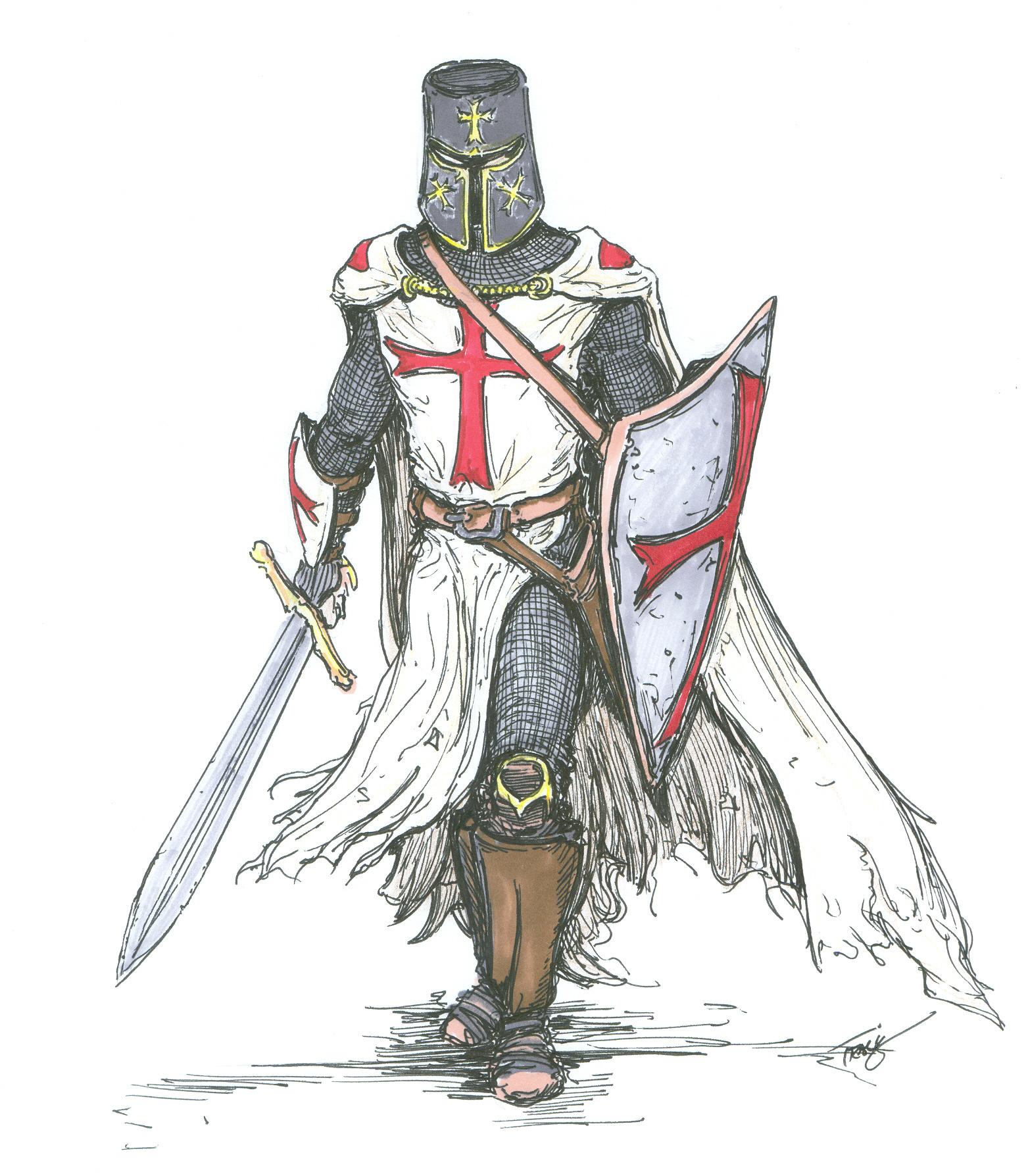
Well, you can get through plate armor, just not with a sword or a longbow. Windlass crossbows, lances, and most advanced bludgeons would work. But a knight's primary detail wasn't getting into melee with another knight, it was killing less armored (read: economically poorer) opponents. To which I posted this counterpoint reply:
- Marty Lund
Actually, +Marty Lund, I'm not so sure about that. As far as I know, and I've read quite a bit on this topic, there were extremely strict codes of conduct among the aristocrats and royalty in the medieval world. A king could not fight a lesser noble, no matter how much he may have wished to, because it was "beneath his dignity". Likewise, Knights could not fight those whom were beneath their dignity. The entire feudal concept, we should recall, was based on The Honor of One's Word embodied in the Feudal Oath... something everyone in that time took very seriously. That particular code was what bound the Knights to their Lord, and that is why it was held to be sacrosanct. Dishonor was far worse than death because it meant that your entire family could be ruined by your disgrace. Honorable conduct on the other hand ensured that your descendents would continue to benefit from your good graces. There's a lot to the feudal world that is not longer understood and there is a tendency (mostly stemming from medieval history professors who seem to promulgate this view) for modern people to believe that the feudal era was simply a forerunner of the Capitalist Era, and that everyone's motives were the same as what we think everyone's motives are today. However, a thoughtful study will show that motivations change with cultures, and the medieval culture was far more concerned with spiritual matters, truthfulness, honor, nobility and things of that ilk than people today can imagine. In fact the tendency of modern people is to scoff at it all (I've seen medieval studies professors do this) as though there could not possibly be any other motivations in the world than materialism, greed, lust and avarice. My inclination is to think that in the modern world that may well be true. But for our medieval forebears... not so much really.

Anyway, many learned people I suspect will disagree and advance the theory that the Medieval World was essentially no different than our own, and that the Knights and Kings were simply fleecing the poor and downtrodden because, after all, that's what the Dark Ages was all about. Maybe. I don't think so, but I'm willing to admit it's possible. But not in my World.
How about in yours? Do you play a medieval fantasy campaign? And if so, how do you express ideas of Chivalry? Or do you not? Very curious how others handle this question!
Tuesday, May 05, 2015
The Evolution of My GMing Style

Richard Stephens
Richard Stephens - I think you kind of hit on the crux of the issue in my mind. When we first started GMing back in 1978 that is exactly what our point of view was in my town. All of us GMs had the same attitude about it, and we all pretty much played it the same way. Later on things evolved. But in the beginning, I didn't even tell my players what their stats were or even what the exact rules of my homebrew rpg were. The reason for that was because we GMs collectively decided that it was better for the players not to know the mechanical details, as that information tended to draw them out of their characters and into a game-oriented frame of mind, but we believed that the purpose of the thing was to get immersed in someone else's world. The mechanics could only inhibit that immersion. So we had our reasons, and I won't say they were bad reasons. It was our style in that era, and we played it for all it was worth.
But things changed. Later, in the late 80's and 90's I decided that the players were at a tactical disadvantage by not knowing the tactical rules. I began using battle maps to show them where their characters were and told them their movement allocation. We played that style for about 5 years, and then I made another evolutionary shift. I decided to give the Players their characters stats, and explained the rules to them. This was so that they could make more intelligent decisions regarding their character's tactical maneuvers. While this definitely made them more efficient and effective as players, and their Characters had a much better chance of survival in terms of the calculated odds, it did in fact manage to detract from the immersion.
When I noticed this effect I decided the immersion aspect is important enough to focus on. So I deliberately established a Descriptive Narration style where I would go very light on stats information in-game, and describe things according to what the Characters know from their own senses. Gone were the "You did 5 points of damage to the kobold" and in came "The wretch with the glassy eyes cries out, a hellish gash spurting blood on his right arm".
During these different phases of my GM style I held different philosophies about how to use the dice. At first they were there for me to use as a guide. I didn't cheat my players though. I played according to my homebrew rules, and I distinctly played according to the dice. And PCs died. Quite a lot, actually.
Then in the next phase with the tactical combat, I let the Players roll their own attacks, and that was done above board, but I rolled for the NPCs and that was behind the screen. I didn't cheat the players, though. I simply kept the dice behind the screen because that was my habit from the prior era, and I felt that it kept the suspense high.
Now, in the current era, I am rolling everything above board, and I let the players know the stats of the monsters. They help me adjudicate the action and make sure that the rules make sense and are working. Of course, this era has been a big play test of my revised mini-system, and that's why I made that particular change. But over time I found that I rather liked the effect. So long as I keep the players immersed in my world via Narrative Descriptions I don't think they mind having the immersion interrupted by tactical combat. We just go in, and go out of the immersion on the basis of the kind of scene that is unfolding. It feels quite natural at this point.
So yeah, I definitely hear ya. I just think there are other modalities and ways of doing things that are just as valid, and just as fun.
Original Post on Google+ with discussion
Monday, January 12, 2015
The Problem with Beautiful Maps

That said, lets think about this. There's two kinds of maps in RPGs. There's battle maps, and then there's geographical maps. The Players may see the battle maps as that's the point of them (though just as often they do not as there may be things on the map they should not see, such as hidden doors). The geographic maps, on the other hand, ... the GM sees, and those the Players often don't get to see as they may wind up being spoilers for the World. After all, for a lot of Players half the fun of the game is exploring and discovering.
So here's the problem... The more beautiful the map the more inclination there is for the GM to show all that lovely beautifulness to the Players... especially if it is the GM's own map that they hand crafted themselves. Of course, we like to share our creative work. Especially when we bother to make it look as beautiful as we can. And the Players love to see that work because it lets them know that the GM has really put some time and thought and serious effort into their world. Which adds enormously to the Players sense that the World is a 'real' thing (in the GM's mind) and that they're actually exploring someplace, as this is what makes immersion possible. All good stuff. But that pesky problem ... we have to be careful not to make our geographic maps with things on it that the Players shouldn't see. But we do want to record those things because ... well, the map is supposed to record what's in our World... so we wind up with this weird situation. We can either make multiple maps that show two (or more) different views of our world (and that's really asking a LOT of anyone). Or we can make our Maps for Our-Eyes-Only. Or we can try revealing little bits of our maps as they become revealed to the Players. Each of these solutions is less than optimal. The least odious among them is to reveal little bits at a time, of course, as that requires the least amount of labor and still allows us to share our beautiousness with our Players. So that's the one I go with.
But there's a rub. Sometimes I make beautiful maps that are somewhere in between Geographic Maps and Battle maps. They're lovely to behold. But they contain all sorts of stuff the Players shouldn't see until they get to it. We can't quite use them as Battle Maps either as they're not quite entirely designed to be used for that purpose. I'm thinking in particular of some of the isometric projection maps I've done recently (similar in style to the one in the image at the top of my post, but you can also see it here). Their purpose is to show me, the GM, what's in the dungeon. Including where the Pit Traps, Magical Thingies, and other WhosieWhatsIts are located. In fact it's completely awful because I have this lovely looking map that I can't share with my Players. At least not before the end of the game. And when does an RPG game actually end? Oh that could be months. Or even years. And even then, sometimes you still don't want to share it because you think "They might someday show up here again, and they still haven't seen the whole thing... don't want to spoil it for em... I'll just hold on to it." And so, in this case you have this lovely map that no one ever gets to see except the GM.
 Then we have another form problem as well. What happens when you like someone elses maps, and you want to use them for your game... but the Players may have already seen it because it's been posted online or in a module or something somewhere? My Players are the sort who would not go out of their way to find a map that I was using from another source (I don't do that anyway, but even if I did, they wouldn't) ... in fact I know them well enough to believe they'd specifically avoid it. But not every Player is like that. And sometimes having a map's secrets in hand (especially if the GM doesn't realize you already know the map) can make a big difference in the outcome of a campaign. "Should we turn left at the fork, or head head to the right?" ... "Oh, lets go to the right. Maybe there's treasure up that way or an old temple or something ..." And lo ... there is. Big difference (especially when the left path leads instead, for example, to a muddy cavern of giant Bobbit Worms, ya'know?). So this is a different variant on the same basic problem. Maps are designed generally to benefit the GM. Not the Players. Stuff on maps most often must be kept from the Players. And yet, ... when they're so gorgeous... how can you not share them? Wahhhh...
This entire issue is about Fog of War in relation to Maps. And the problem I have with loving to create beautiful maps, but hating to share them before the Players have completely finished with the scenario. I want to make them useful for myself as GM, so they include all the little details the Players mustn't see. And yet... it's beautiful and I'd love to share it.
Case in point. The other day I was having a computer problem. My players came into my little side room to help me troubleshoot it, and on my desk was one of my nicer-than-usual maps in a new style my players haven't seen yet.
"WOW!" they exclaimed. I had to quickly grab the map before they could take a real look at it. Now they really would love to see it. That's good and bad. I can't reveal it to them without giving important information away. So I hide it. Oh duh. Why is this such a problem?
Because that's just how it is. It's a weird and convoluted thing, frankly. And I'm not sure what the elegant solution to it all may be. For now I will just hide the maps and reveal them little bits at a time by covering over what they haven't seen yet with black construction paper. And believe me... that's not really all so ideal... though it does have it's benefits. The maps are intriguing them sufficiently to make them want to press forward to look around at everything they can get their eyes on. Which is kind of cool... but may well turn out to be misleading and dangerous for them. After all ... somewhere in that maze of gorgeous looking chambers and caverns is the Serious Bad Guy. They might just not be up to it... but their desire to see then next thing on the map could compel them forward. It's like a bit of meta-gaming in reverse and at a diagonal. And I'm not at all sure how that aspect might play out. We'll see. Hopefully, I'll come up with a good way to handle the whole kit and caboodle of this issue before that happens. And in the meantime I will refrain from publishing my map for you on my blog ... where they might see it. Waaaahhhh.... :p
Ok. Nuff said for today on this. If you have thoughts, suggestions, insights or epiphanies... please let me know. Darnit, I'd love to hear em.
Wednesday, December 17, 2014
The GM as Magician

How so? Well you set up encounters. You create Maps. You create NPCs. You act them out improvisationally during the course of the game. No one knows really exactly what is going to happen because the Dice and the Players conspire to change whatever plans we may have had. And so improvisation is required.
But what the Players don't know, and in my opinion shouldn't know, is exactly what's been planned, and what's being improvised. They know its a mix. But they don't know how much of a mix. And that's a good thing, and should stay that way. Because one of the things that brings interest and excitement to the game is the idea that the GM's World is this real "other Place" that you can use your imagination to venture into. And when that works and you achieve some level of Immersion - it's awesome. Provided of course that the GM's World is actually awesome. But that's a different point. What I'm suggesting is that the GM should not divulge to the Players what his 'tricks' are... any more than the Magician will show you how he does a coin trick. The moment he does - the mystery is finished. You may have learned a trick, but you've lost the Immersion.
So unless you are teaching a new GM the tricks of the trade - don't tell your Players anything about what's going on behind the curtain. It's more fun for them, and probably improves the quality of their experience overall.
Monday, December 08, 2014
The Difference Between Computer and Table Top RPGs

Another difference, though, and one that I find even more interesting, is that CRPGs are designed from the point of view of Action and Suspense through mechanisms that are wholly different than TTRPGs. First off TTRPGs are typically (I don't know if there are exceptions) turn based. They are an offshoot of tactical war-games. They are Strategic or Tactical in nature. You plan your moves, you think carefully, you plot out distances and make calculations based on math. Then you move and your characters take their actions. The dice are rolled and outcomes are determined and described.
Conversely, in CRPGs you move fast, you run towards the opponent, rapidly assess whatever skill or spell you're going to use or "fire" and twitch your way to ever-loving glory. It's fast paced fun and exciting.
So between the two games where do you get suspense? In one you get it from the live action element. In the other ... and that's the interesting part. For Table Top RPGs you need to do something extra to gain the element of suspense. You need to build a story. You need the Characters to be invested in that story, and you need to build suspense in the Players by cultivating that story in such a way as to make them, at some point, sit on the edge of their seats ... and when you do that, you've achieved a particular kind of mastery in Table Top RPGs. It's not about system. This kind of mastery is about story telling.
When I Gamesmaster I try to build up towards climactic events that will along the way create a mounting suspense among the players. I do it by emotionally involving their Characters in the story. For example, recently a Character named Hermel was essentially a retired hero. He saved his town from the bandits, uncovered a mystery or two along the way, helped to eliminate a dangerous gang from the local town, found the girl of his dreams and, well, was satisfied. He didn't want to take any chances on adventuring his way into self destruction. Understandable!
Yet the world goes on. And adventure was calling his name. Mostly because there is a new campaign brewing. A very interesting one. Right near the village where Hermel settled down and started his farm and family.
So one day adventure came looking for Hermel and his friends. It came in the form of a Town Hall meeting. Hermel waited outside, not wishing to get himself involved. At the end of the meeting the bad news was told. While the town had been prospering after the elimination of the Bandits, and the building of the town wall (at Hermel's suggestion), and the opening of a local sulfur mine (by one of Hermel's adventuring Compatriots Ishcandar's father, the wealthy Mr. Rockerfellah) ... there were problems. Hermel stood outside patiently waiting. It turned out that there had been kidnappings recently. No one knew by whom. Three children had been taken in the past three nights. During heavy storms. Right out from under their parent's noses.
It began raining.
Hermel looked at his lovely wife who was seated next to him on the bench outside the doorway of the the Town Hall.
"Did we leave Peaches (his daughter's nickname) at home?" he asked. "Of course," said his wife, but before she could finish the sentence Hermel was already running full tilt towards the commons beyond which, at the edge of the village, his farmhouse stood in the darkness. "Peaches!" he yelled at the top of his lungs as he ran. "Peaches!"
The towns folk, who all knew Hermel quite well, ran outside. There was a buzz around the hall, and some ran after him, while others ran to their own homes to check on their own children. Hermel's wife, Apricot, gathered as many friends as she could quickly muster with a shout and ran after her husband, her dress dampening in the increasing rain. The wind began to howl. The rain came down in pelts.
She was gone.
And so Hermel wasted no time in finding the thin trail of odd shaped tracks that lead him and his friends into the wilderness...
And that's how suspense gets built with story. It's fabulous fun.
And for me, that's the big gigantic difference between Computer and Table Top RPGs. I can do that with my Table Top RPG. I can't do anything like that whatsoever with my Computer RPG.
Wednesday, November 05, 2014
The Elthos Cosmology Encapsulated
This diagram illustrates the conceptual framework of the Elthos World ... it includes the relative positions of both groups of Deities - the Cosmic Celestials and the Archetypes.
 The Cosmic Celestials operate in the Realm of Divine Ideas, above the conscious mind. The Archetypes, on the other hand, operate in the realm of the ID, below the subconscious mind. Wilderness adventures will have a tendency to relate to themes pertaining to the Cosmic Elkron, and quests of the upper world. Delving into dungeons and caverns will conversely explore the realms of the subconscious mind, and ultimately, if one goes deep enough, the realm of the Id. So the higher or deeper you go the more mystical the nature of the exploration becomes.
The Cosmic Celestials are represented by Zodiac and Planetary signs, while the Archetypes are represented by the Major Arcane cards of the Tarot Deck. Each Archetype has a corresponding Celestial. So if you were to imagine the two groups of Ekron overlapped they would form two disks divided into twelve pie slices, and both disks forming two concentric circles, as can be seen below.

The Cosmic Celestials are pictographically represented here on the back face of the Elthos Tarot Deck.

The Archetypes are represented in the Major Arcana of the Deck, and here's an example.
 So what we see here is that this Major Arcana card is the Archetype of The Magician, and is associated to the Planet Mercury and the Zodiac Sign of Gemini.
How this all plays out in terms of Elthos, the world, is that the Elkron are Cosmological Forces of the upper and lower realms of the Mind, and personifications of the Alignments to which they are associated. They war and ally with one another in accordance with their natures and the movement of the Planets and Archetypes as they perform the Dance of the Spheres. This all happens at the Cosmological level of the Campaign wherein the purposes and circumstances of the Elkron are charted.
That said, it has been very rare for Player Characters to advance high enough or deep enough to experience or comprehend the true nature of the Dance of the Elkron, or even more than a passing glimpse of it. However, it is there nevertheless, ever in motion, ever synchronizing elements of the back story with elements of the plot line. It's quite an exquisite system in many ways. Some day I do hope to rationalize it well enough to put into a book and explain to other GMs how it works, and what one might do with it. Until then, however, its to be taken as a kind of philosophic art that enhances the Elthos world in some mysterious way, as yet quite unfathomable to the Player Characters (or other GMs). Perhaps some day a particularly stellar mage will arise in the Campaign who will begin to make sense of it all.
The Cosmic Celestials are represented by Zodiac and Planetary signs, while the Archetypes are represented by the Major Arcane cards of the Tarot Deck. Each Archetype has a corresponding Celestial. So if you were to imagine the two groups of Ekron overlapped they would form two disks divided into twelve pie slices, and both disks forming two concentric circles, as can be seen below.
The Cosmic Celestials are pictographically represented here on the back face of the Elthos Tarot Deck.
The Archetypes are represented in the Major Arcana of the Deck, and here's an example.
How this all plays out in terms of Elthos, the world, is that the Elkron are Cosmological Forces of the upper and lower realms of the Mind, and personifications of the Alignments to which they are associated. They war and ally with one another in accordance with their natures and the movement of the Planets and Archetypes as they perform the Dance of the Spheres. This all happens at the Cosmological level of the Campaign wherein the purposes and circumstances of the Elkron are charted.
That said, it has been very rare for Player Characters to advance high enough or deep enough to experience or comprehend the true nature of the Dance of the Elkron, or even more than a passing glimpse of it. However, it is there nevertheless, ever in motion, ever synchronizing elements of the back story with elements of the plot line. It's quite an exquisite system in many ways. Some day I do hope to rationalize it well enough to put into a book and explain to other GMs how it works, and what one might do with it. Until then, however, its to be taken as a kind of philosophic art that enhances the Elthos world in some mysterious way, as yet quite unfathomable to the Player Characters (or other GMs). Perhaps some day a particularly stellar mage will arise in the Campaign who will begin to make sense of it all.
Subscribe to:
Posts (Atom)